
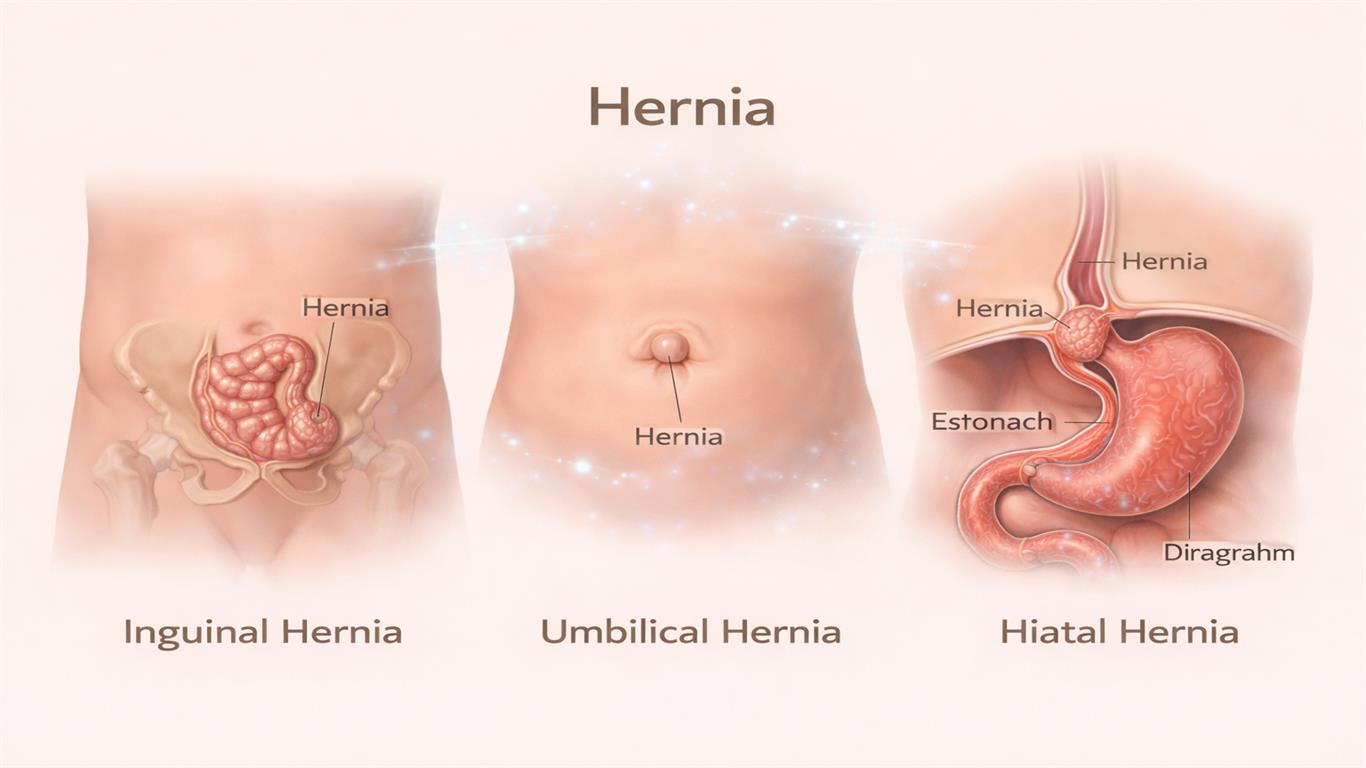
This is one of the most common questions patients ask after noticing a hernia. The simple answer is no—a hernia does not heal on its own. While symptoms may come and go, the underlying weakness in the abdominal wall remains and usually worsens over time.
Why a Hernia Cannot Heal Naturally
A hernia occurs due to a defect or weakness in the muscle wall. Once this defect forms, the body cannot repair it by rest, exercise, medicines, or diet. Unlike muscle strain, the opening does not close on its own.
Can Medicines or Exercises Cure a Hernia?
- Medicines may temporarily reduce pain or discomfort but do not fix the defect.
- Exercises may strengthen surrounding muscles but cannot close the hernia opening.
- In many cases, wrong exercises can actually worsen the hernia by increasing abdominal pressure.
What About Hernia Belts or Trusses?
Hernia belts may hold the bulge in place temporarily and give short-term comfort. They do not treat the hernia and should not be considered a cure. Long-term use may delay proper treatment and increase complication risk.
Why Waiting Can Be Risky
Over time, hernias usually increase in size. As the opening enlarges, surgery becomes more complex and recovery may take longer. There is also a risk of obstruction or strangulation, where blood supply to the intestine is cut off, making it a surgical emergency.
When Is Surgery Recommended?
Surgery is the only definitive treatment for a hernia. It is usually advised once a hernia is diagnosed, even if symptoms are mild. Early planned surgery is safer and simpler compared to emergency surgery.
Are There Any Situations Where Surgery Is Delayed?
In some patients with very small, painless hernias or those with serious medical conditions, surgery may be temporarily deferred with close monitoring. This is a decision made after medical evaluation, not self-management.
Key Takeaway
A hernia is a structural problem that requires surgical repair. Delaying surgery does not heal the hernia—it only postpones treatment and increases future risk. Early evaluation allows safer correction and smoother recovery.