


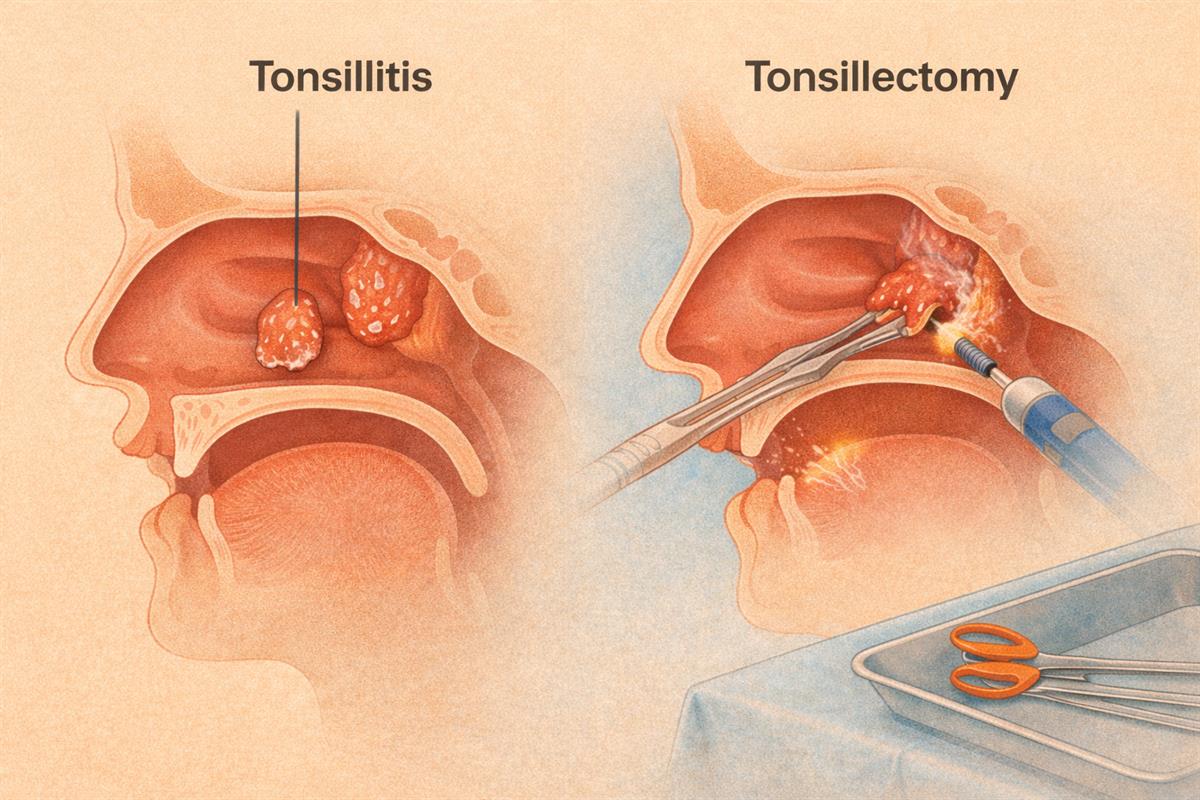
Tonsillectomy
Tonsils are oval-shaped lymphoid tissues located on either side at the back of the throat.
They form part of the immune system and act as a first-line defence by trapping bacteria and viruses entering through the mouth and nose, especially in early childhood.
What is the role of tonsils?
- Tonsils help develop immune responses during early years of life
- They produce antibodies against common respiratory infections
- Their immune role reduces significantly after early childhood
- Other lymphoid tissues take over their function as a person grows
What symptoms are associated with tonsil disease?
- Repeated episodes of sore throat
- Pain or difficulty while swallowing
- Persistent bad breath
- Snoring or mouth breathing
- Disturbed sleep or breathing pauses during sleep
- Recurrent fever related to throat infections
When is medical help required?
Medical consultation is advised if throat infections are frequent, if symptoms persist despite treatment, if sleep is affected due to snoring or breathing difficulty, or if swallowing becomes painful or restricted.
Treatment Options
Non-surgical treatment
- Antibiotics for acute bacterial infections
- Pain relief and supportive care
- Medical management is suitable for mild or infrequent infections
Surgical treatment (definitive treatment)
When is tonsillectomy recommended?
- Recurrent bacterial tonsillitis affecting school or work attendance
- Chronic tonsil infection not responding to medical treatment
- Enlarged tonsils causing airway obstruction
- Sleep-disordered breathing or obstructive sleep apnoea
- Peritonsillar abscess or suspected tonsillar pathology
What happens if tonsils are removed?
Removal of tonsils does not weaken long-term immunity
Other lymphoid tissues compensate for their immune function
No increase in long-term infection risk is seen
Normal immune responses are maintained in children and adults
How is tonsillectomy performed?
- The surgery is performed under general anaesthesia
- Tonsils are removed through the mouth without any external cuts
- Bleeding is controlled during the procedure
- The surgery usually takes 30–45 minutes
What types of tonsillectomy techniques are used?
- Conventional cold dissection tonsillectomy
- Electrocautery tonsillectomy
- Coblation tonsillectomy with reduced tissue damage
- Technique selection depends on age, anatomy, and disease severity
What are the benefits of tonsillectomy?
- Permanent relief from recurrent tonsil infections
- Improved swallowing comfort
- Better sleep quality and reduced snoring
- Improved overall quality of life
- Reduced need for repeated antibiotic courses
What are the possible limitations and risks?
- Postoperative throat pain during recovery
- Temporary difficulty in swallowing
- Risk of bleeding during early or late recovery
- Recovery period longer compared to minor ENT procedures
How does recovery and after care progress?
- Hospital stay is usually short or same-day discharge
- Throat pain is common for 7–10 days
- Soft and cool foods are advised initially
- Adequate hydration is essential
- Strenuous activity should be avoided for two weeks
- Normal school or work can usually be resumed after 10–14 days
- Follow-up visits help detect bleeding and ensure proper healing