


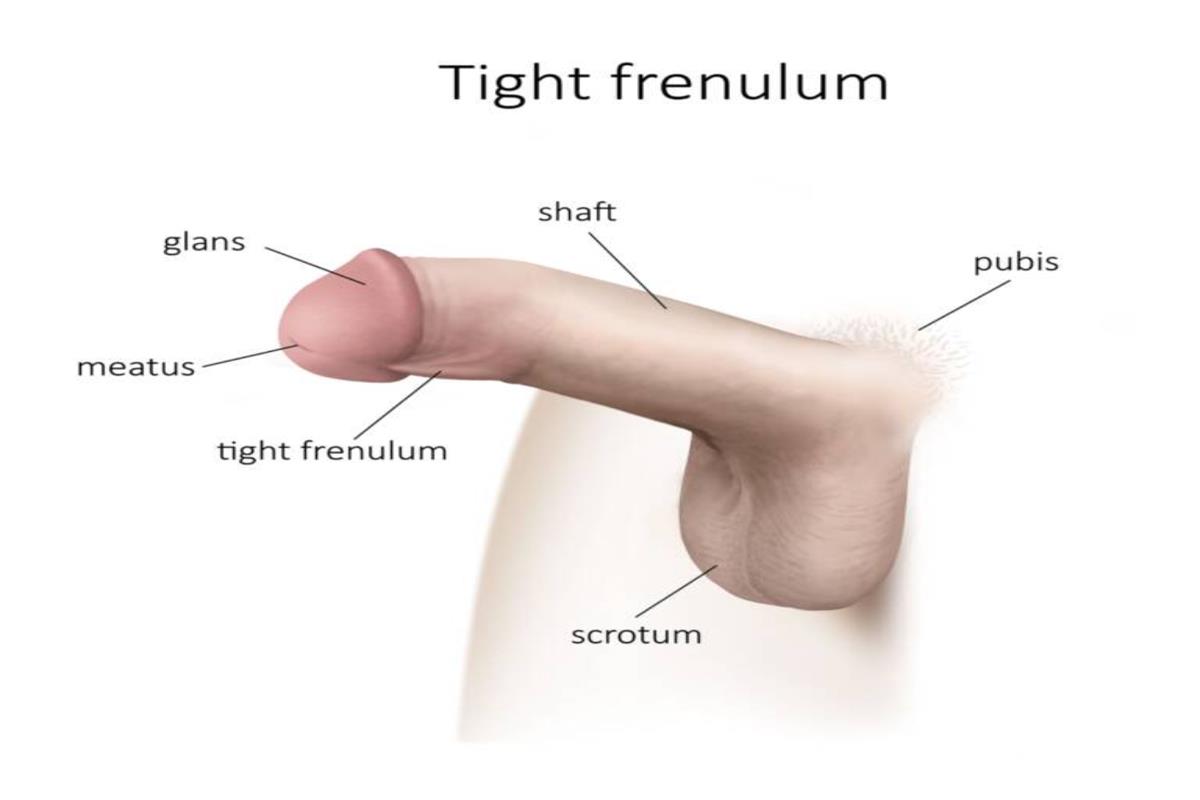
Tight Frenulum (Frenulosplasty)
This restricts normal movement of the foreskin and can cause pain, tearing, or functional difficulty, especially during erection or sexual activity.
Causes
- Congenitally short frenulum present since birth.
- Repeated infections or inflammation of the foreskin and glans.
- Poor genital hygiene leading to scarring.
- Uncontrolled diabetes mellitus causing recurrent infections and fibrosis.
- Previous minor tears of the frenulum with improper healing.
Risk Factors
- Uncircumcised males.
- Recurrent balanitis or balanoposthitis.
- Diabetes mellitus.
- Poor local hygiene.
- History of painful intercourse or frenular tears.
Symptoms
- Pain or tightness at the underside of the penis during erection.
- Downward bending of the glans on erection.
- Recurrent tearing or bleeding from the frenulum.
- Difficulty in retracting the foreskin.
- Discomfort during sexual activity or masturbation.
When to Seek Medical Help
- Persistent pain or tearing during erection.
- Bleeding from the frenulum.
- Difficulty with sexual activity.
- Recurrent infections or inflammation.
- Associated foreskin problems such as phimosis or paraphimosis.
Why It Is Important to Treat
Untreated tight frenulum can lead to repeated tears, scarring, chronic pain, anxiety related to sexual activity, and increased risk of infections.
Early treatment improves comfort, function, and hygiene.
Diagnosis
- Clinical diagnosis based on physical examination.
- No routine investigations required.
Treatment Options
Conservative Management
- Topical steroid creams in selected mild cases to improve elasticity.
- Stretching exercises under medical guidance.
- Treatment of associated infections.
Surgical Management – Frenuloplasty
- Frenuloplasty is the preferred and definitive treatment for symptomatic tight frenulum.
- The procedure involves releasing and lengthening the frenulum while preserving the foreskin.
- It is usually done as a short day-care procedure under local anesthesia.
- The tight frenular band is carefully incised and reconstructed to allow normal foreskin movement.
- Absorbable sutures are used, so stitch removal is usually not required.
- The procedure typically takes 20–30 minutes.
Laser Frenuloplasty
- Laser energy is used instead of a surgical blade to release the frenulum.
- It offers better precision, minimal bleeding, reduced postoperative swelling, and faster recovery.
- Performed under local anesthesia as a day-care procedure.
Frenuloplasty with Circumcision
- Recommended when tight frenulum is associated with phimosis, recurrent infections, or poor foreskin hygiene.
- Provides definitive relief and reduces recurrence risk.
Aftercare and Recovery
- Mild pain and swelling for a few days is common.
- Local wound care and hygiene are essential.
- Sexual activity should be avoided for about 2–4 weeks until healing is complete.
- Most patients can resume routine daily activities within 2–3 days.
- Complete healing usually occurs within 3–4 weeks.
Prevention
- Early treatment of infections.
- Good genital hygiene.
- Avoid forceful foreskin retraction.
- Good glycemic control in diabetic patients.