


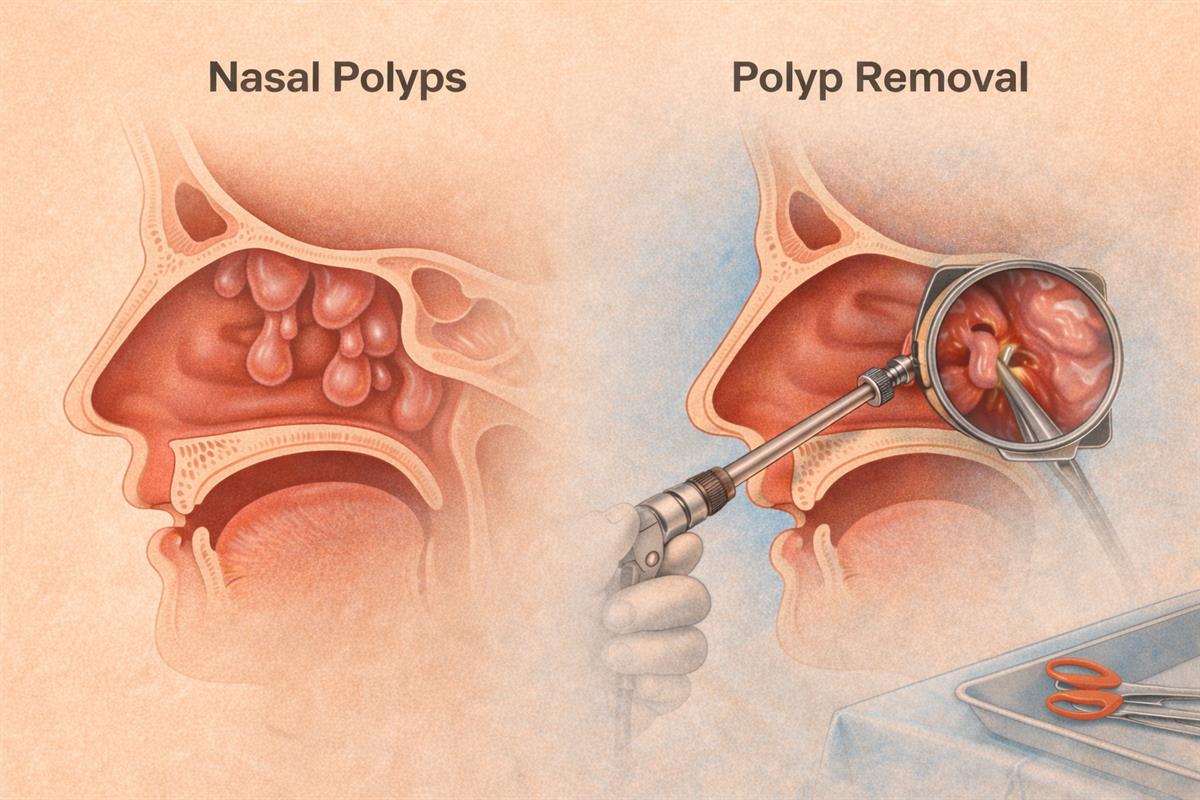
Nasal Polyps
Nasal polyps are soft, painless, non-cancerous growths that develop from the lining of the nose or sinuses.They are usually associated with long-standing inflammation and can obstruct normal nasal airflow and sinus drainage.
What causes nasal polyps?
- Chronic inflammation of the nasal lining
- Long-standing sinus infections
- Allergic rhinitis
- Asthma-associated airway inflammation
- Aspirin sensitivity
- Fungal sinus infections
- Genetic tendency in selected individuals
What symptoms are associated with nasal polyps?
- Persistent nasal blockage
- Runny nose or post-nasal drip
- Reduced or lost sense of smell
- Facial pressure or heaviness
- Headache related to sinus blockage
- Mouth breathing and snoring
- Recurrent sinus infections
When is medical help required?
Medical consultation is advised if nasal blockage persists for weeks, if sense of smell reduces, if sinus infections recur frequently, or if symptoms do not improve with regular medical treatment.
What treatment options are available for nasal polyps?
Non-surgical treatment
- Nasal steroid sprays to reduce inflammation
- Short courses of oral steroids in selected cases
- Antihistamines when allergy is associated
- Saline nasal irrigation
Medical treatment helps shrink polyps but may not eliminate large or recurrent ones
Surgical treatment (definitive treatment)
Why is surgery recommended for nasal polyps?
- Large polyps cause persistent nasal obstruction
- Medical treatment fails to provide lasting relief
- Polyps block sinus drainage leading to repeated infections
- Loss of smell affects quality of life
- Associated sinus disease requires clearance
What situations commonly require surgery?
- Chronic rhinosinusitis with nasal polyps
- Recurrent polyps despite adequate medical therapy
- Complete nasal blockage
- Complications related to sinus infections
- Polyps associated with fungal sinusitis
How is nasal polyp surgery performed?
- Surgery is performed under general anaesthesia
- Endoscopes are inserted through the nostrils
- No external cuts or facial scars are made
- Polyps are removed under direct vision
- Blocked sinus openings are widened if required
- Normal sinus ventilation and drainage are restored
- Procedure duration depends on disease extent
What surgical procedures are used for nasal polyps?
- Endoscopic polypectomy
- Functional Endoscopic Sinus Surgery (FESS)
- Combined polypectomy with septoplasty or turbinoplasty when indicated
Choice depends on polyp size, extent, and sinus involvement
What are the benefits of surgical treatment?
- Improved nasal breathing
- Restoration of sinus drainage
- Improved sense of smell in many patients
- Reduction in frequency of sinus infections
- Better response to postoperative medical therapy
- Improved quality of life
What are the possible limitations and risks?
- Chance of polyp recurrence over time
- Temporary nasal blockage during healing
- Mild bleeding or crusting
- Need for long-term medical therapy even after surgery
- Rare risk of injury to surrounding structures
How does recovery and after care progress?
- Most patients are discharged the same day or next day
- Nasal congestion and mild blood-stained discharge are common initially
- Saline nasal rinses are advised regularly
- Avoid nose blowing for at least one week
- Strenuous activity should be avoided for 7–10 days
- Normal work or daily activities can usually be resumed within 5–7 days
- Regular follow-up improves long-term surgical success