


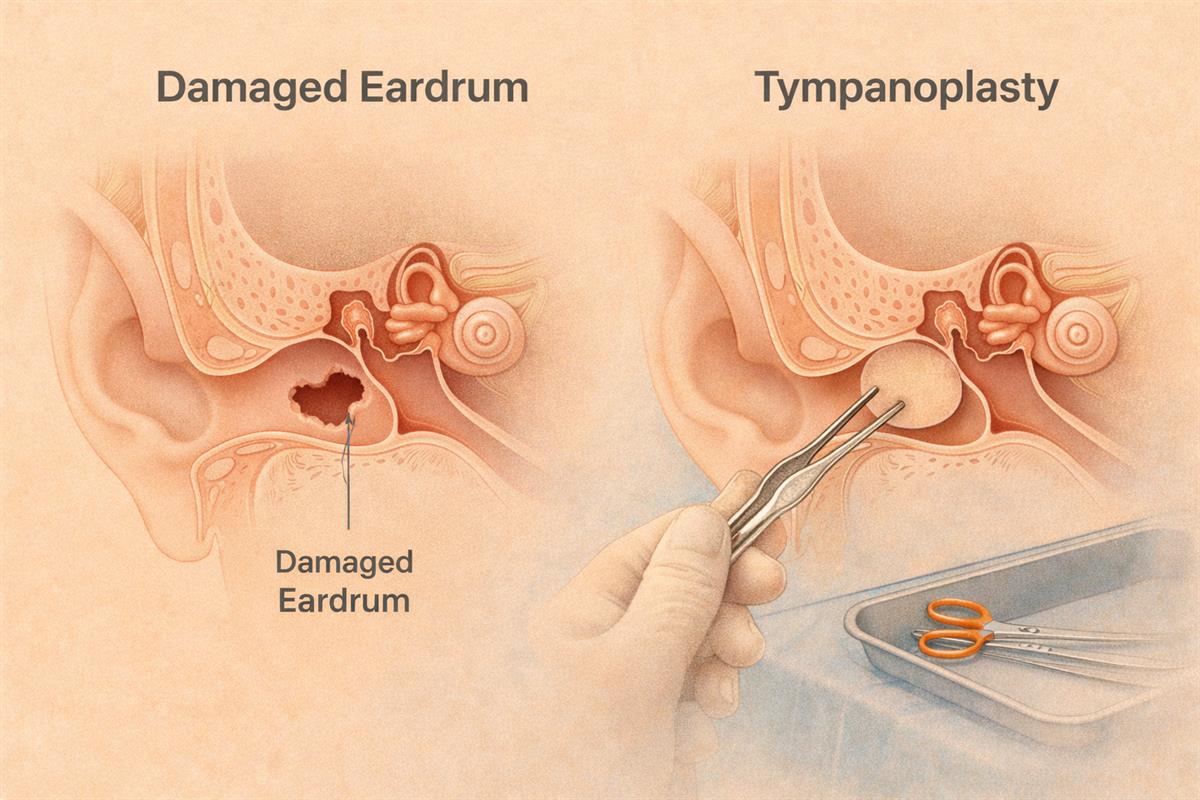
Tympanoplasty
Tympanoplasty is a surgical procedure performed to repair a perforation (hole) in the eardrum and restore normal middle ear function. The surgery aims to improve hearing, prevent recurrent ear discharge, and protect the middle ear from repeated infections.
Causes of Eardrum Perforation
- Chronic middle ear infection
- Repeated ear discharge since childhood
- Trauma due to ear cleaning with objects
- Sudden pressure changes or loud sound exposure
- Previous ear surgery
- Injury to the ear
Symptoms Associated with Eardrum Perforation
- Recurrent or persistent ear discharge
- Hearing loss in the affected ear
- Blocked or heavy sensation in the ear
- Recurrent ear infections
- Occasional ear pain
- Increased risk of water entering the ear
When to Seek Medical Help
Medical evaluation is advised if ear discharge persists or recurs, if hearing loss is noted, if infections repeat despite treatment, or if water exposure repeatedly triggers ear symptoms.
Types of Treatment for Eardrum Perforation
Non-Surgical Treatment
- Small perforations may heal spontaneously
- Antibiotic ear drops control infection
- Strict ear protection from water is advised
Medical treatment does not close chronic perforations
Surgical Treatment
Tympanoplasty
Tympanoplasty is recommended for chronic, non-healing eardrum perforations and recurrent infections.
Why Is Tympanoplasty Recommended
- Chronic perforations rarely heal on their own
- Persistent infection damages middle ear structures
- Hearing loss may worsen over time
- Open eardrum increases risk of repeated infections
How Is Tympanoplasty Performed
- Performed under general or local anaesthesia
- A graft is taken from the patient’s own tissue, commonly temporalis fascia
- The graft is placed to close the eardrum perforation
- The approach may be through the ear canal or behind the ear
- Microscopic or endoscopic techniques are used for precision
- Surgery duration is usually 1–2 hours
Types of Tympanoplasty
- Type I Tympanoplasty
Repairs only the eardrum
- Type II–V Tympanoplasty
Involves reconstruction of middle ear bones when damaged
The type depends on the extent of disease and hearing lossEndoscopic Tympanoplasty
- Minimally invasive technique using an endoscope
- Better visualisation of the middle ear
- No external incision in many cases
- Less postoperative discomfort
- Faster recovery
Benefits of Tympanoplasty
- Closure of the eardrum perforation
- Reduction or complete stoppage of ear discharge
- Improvement in hearing
- Lower risk of future ear infections
- Ability to safely expose the ear to water after healing
Limitations and Cons
- Hearing improvement varies depending on middle ear condition
- Temporary ear fullness during healing
- Rare risk of graft failure
- Repeat surgery may be required in a small percentage of cases
Recovery and After Care
- Most patients are discharged the same day or next day
- Mild ear pain or fullness is common initially
- Ear packing may remain for 1–2 weeks
- Keep the ear dry during the healing period
- Avoid nose blowing and heavy lifting for at least two weeks
- Normal daily activities can usually be resumed within 5–7 days
- Hearing improvement is gradual over several weeks
- Regular follow-up is essential to assess graft healing