

Deviated Nasal Septum (DNS)
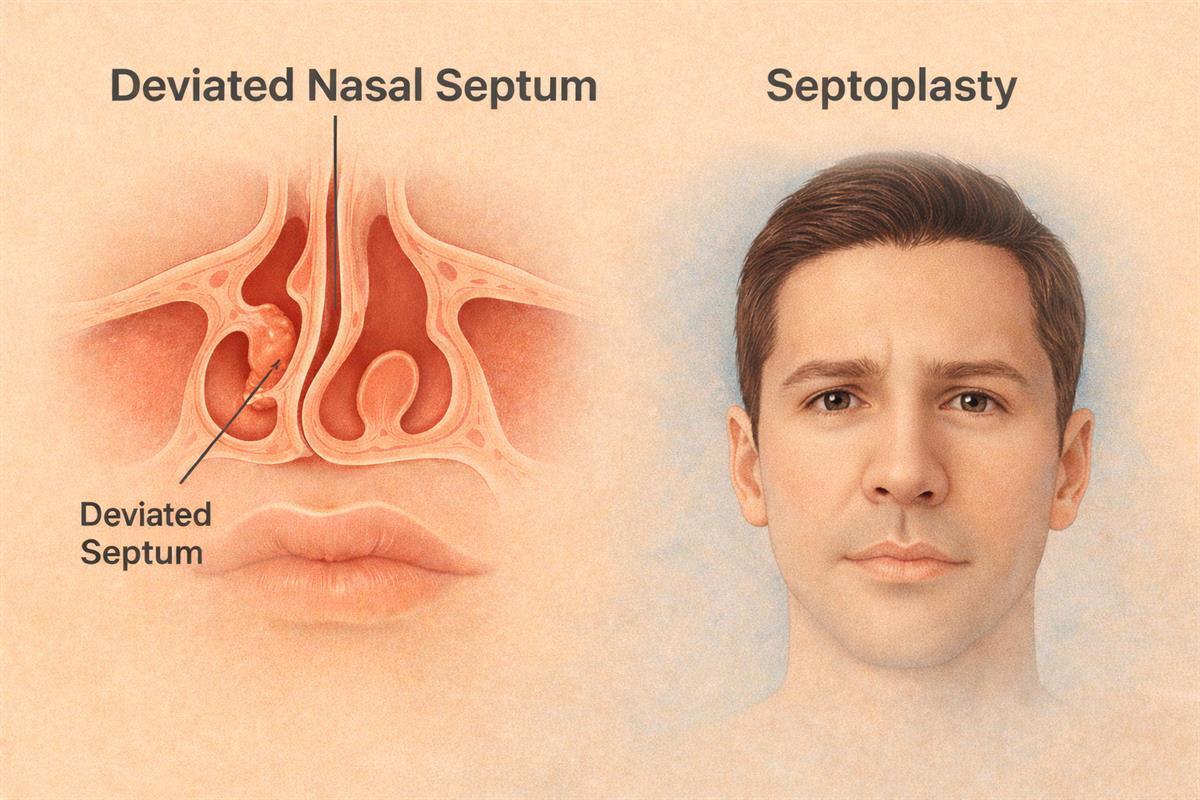
A deviated nasal septum occurs when the thin wall between the two nasal passages is displaced to one side. This leads to reduced airflow, chronic nasal blockage, and related nasal or sinus problems.
Causes of Deviated Nasal Septum
- Congenital deviation present from birth
- Abnormal nasal development during growth
- Injury or trauma to the nose
- Sports-related or accidental facial injury
- Age-related structural changes of the nasal framework
Symptoms Associated with DNS
- Persistent nasal blockage on one or both sides
- Difficulty breathing through the nose
- Frequent sinus infections or facial pressure
- Recurrent nasal discharge or post-nasal drip
- Snoring or disturbed sleep
- Headache related to sinus congestion
- Occasional nosebleeds due to dry airflow
When to Seek Medical Help
Medical consultation is recommended if nasal obstruction persists despite treatment, if sinus infections are recurrent, if sleep quality is affected due to nasal blockage, or if breathing difficulty interferes with daily activities.
Types of Treatment for DNS
Non-Surgical Treatment
- Medical treatment helps control symptoms but does not correct the deviation
- Nasal steroid sprays reduce inflammation
- Antihistamines help when allergy is associated
- Decongestants provide temporary relief in acute congestion
Useful mainly for mild or intermittent symptoms
Surgical Treatment (Definitive Treatment)
Septoplasty
Septoplasty is the definitive surgical procedure for correcting DNS and is advised when symptoms are persistent or severe.
Why Septoplasty is Recommended
- Structural deviation cannot be corrected with medicines
- Chronic obstruction increases the risk of sinus infections
- Impaired nasal airflow affects sleep and oxygenation
- Long-term medication use is not a permanent solution
How Is Septoplasty Performed
- Performed under general or local anaesthesia
- Incision made inside the nose with no external scar
- Deviated cartilage and bone are reshaped or removed
- Septum is repositioned to the midline
- Internal splints or soft packing may be placed temporarily
- Surgery duration is usually 30–60 minutes
Endoscopic Septoplasty
- Minimally invasive technique using a nasal endoscope
- Provides superior precision and visualisation
- Less tissue trauma and reduced bleeding
- Faster recovery compared to conventional surgery
Septoplasty with Turbinoplasty
- Enlarged turbinates often coexist with DNS
- Turbinoplasty reduces turbinate size
- Combined surgery provides better long-term nasal airflow
Benefits of Surgical Treatment
- Permanent relief from nasal obstruction
- Improved breathing and airflow
- Reduction in sinus infections
- Better sleep quality and reduced snoring
- Improved quality of life
- Reduced dependency on long-term medications
Possible Limitations and Cons
- Temporary nasal congestion during recovery
- Mild bleeding or pressure sensation
- Rare risk of septal perforation or residual deviation
- Outcome depends on associated nasal or sinus conditions
Recovery and After Care
- Most patients are discharged on the same day
- Temporary nasal blockage due to packing is common
- Mild pain or pressure sensation may occur
- Avoid nose blowing for at least one week
- Strenuous activity should be avoided for 7–10 days
- Normal work or school can usually be resumed within 5–7 days
- Regular follow-up ensures proper healing