
Varicose Veins Surgery
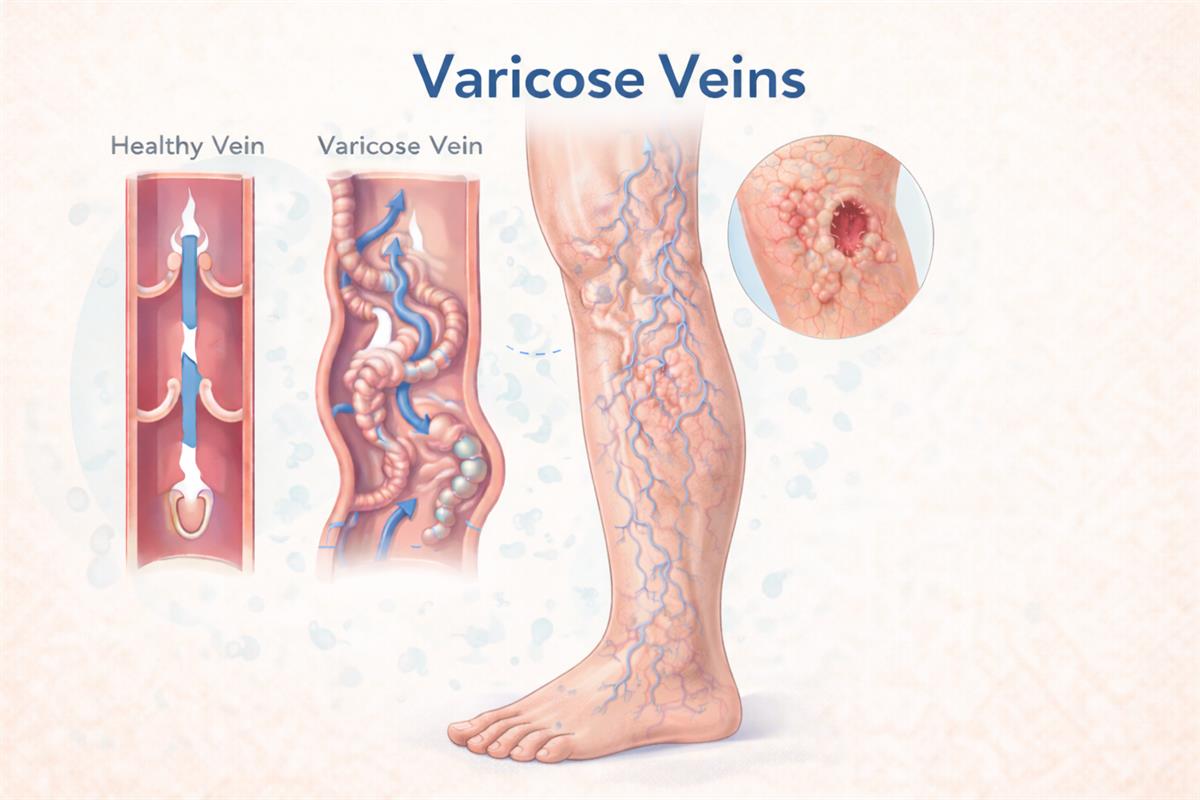
Varicose veins are enlarged, twisted, and visible veins that most commonly affect the legs. They occur when blood does not flow efficiently back to the heart and instead pools within the veins. Over time, this leads to vein enlargement, pain, swelling, skin changes, and ulcers.
Varicose vein disease is a chronic venous circulation disorder, not just a cosmetic issue, and tends to progress if left untreated.
Varicose vein surgery includes modern minimally invasive procedures that close or eliminate diseased veins and redirect blood flow through healthy veins.
How do Varicose Veins Occur
Blood from the legs must travel upward against gravity. This process depends on one-way vein valves, calf muscle contraction during walking, and healthy vein walls.
Varicose veins develop when this system gradually fails.
- Prolonged standing or sitting increases pressure in leg veins
- Reduced calf muscle activity weakens the pumping action
- Vein walls stretch under sustained pressure
- Valves fail to close properly
- Blood flows backward and pools in the veins
This persistent pressure, known as chronic venous hypertension, causes veins to enlarge and twist, leading to leg pain, swelling, skin changes, and ulcers over time.
Common Causes of Varicose Veins
- Valve weakness in superficial leg veins
- Prolonged standing or sedentary work
- Poor calf muscle pump function
- Pregnancy and hormonal changes
- Obesity and increased abdominal pressure
- Family history and genetic predisposition
- Age-related weakening of vein walls
The aim is to relieve symptoms, prevent complications, and improve circulation and quality of life.
When Is Surgery Needed
- Persistent leg pain, heaviness, or aching
- Visible bulging or twisted veins
- Leg swelling, cramps, or burning sensation
- Skin discoloration, itching, or eczema around the ankle
- Non-healing venous ulcers
- Bleeding from varicose veins
- Failure of compression stockings and medical treatment
Why Is Surgery Needed for Varicose Veins
Non-surgical treatments such as medicines, compression stockings, and lifestyle changes can reduce symptoms but do not correct the underlying vein valve failure.
Surgery is recommended because it:
- Corrects the faulty veins and abnormal blood flow at the root cause
- Provides long-term relief rather than temporary symptom control
- Prevents progression to skin changes, pigmentation, and venous ulcers
- Reduces the risk of bleeding and recurrent vein inflammation
- Improves leg function, comfort, and ability to walk for long periods
Surgical treatment addresses the cause of varicose veins, while non-surgical methods mainly offer supportive relief.
Pre-Surgery Evaluation
- Clinical examination of both legs
- Venous Doppler ultrasound to identify reflux and vein anatomy
- Assessment of deep venous system
- Procedure selection based on vein size, location, and disease severity
Who Is an Ideal Candidate
- Symptomatic varicose veins confirmed on Doppler
- Failure of conservative treatment
- Skin changes or venous ulcers
- Medically fit for intervention
- Realistic expectations regarding outcomes
Surgery Options
Endovenous Laser Ablation (EVLA)
Laser energy seals the diseased vein from inside under ultrasound guidance.
- Pros
- Minimally invasive
- Local anaesthesia
- Day-care procedure
- High success rate
- Cons
- Temporary pain or tightness
- Rare nerve irritation
Radiofrequency Ablation (RFA)
Uses controlled radiofrequency heat to close faulty veins.
- Pros
- Less post-procedure pain
- Minimal bruising
- Excellent long-term outcomes
- Cons
- Higher cost
- Not suitable for very tortuous veins
Glue Closure (Cyanoacrylate)
Medical adhesive seals the vein without heat.
- Pros
- No thermal injury
- Minimal pain
- Quick return to work
- Often no compression stockings required
- Cons
- Higher cost
- Rare inflammatory reaction
Foam Sclerotherapy
Chemical foam closes smaller or residual varicose veins.
- Pros
- Simple outpatient procedure
- Useful for branch or recurrent veins
- Cons
- May require multiple sessions
- Higher recurrence if used alone for large veins
Risks and Limitations
- Temporary pain, swelling, or bruising
- Skin pigmentation changes
- Nerve irritation or numbness
- Rare blood clots
- Underlying vein weakness remains
- Possibility of recurrence over time
Recurrence of Varicose Veins
Treatment corrects existing diseased veins but does not eliminate the tendency to develop new vein problems.
Recurrence may occur due to genetic predisposition, progression of venous disease, new valve failure in untreated veins, weight gain, prolonged standing, or poor long-term lifestyle modification.
Regular follow-up and preventive care reduce recurrence risk.
Recovery and Aftercare
- Most procedures are day-care
- Walking encouraged on the same day
- Compression stockings advised for a limited period
- Normal daily activities resumed in 1 to 3 days
- Heavy exercise avoided for 1 to 2 weeks
- Maintain healthy body weight
- Leg elevation during rest
- Regular follow-up Doppler scans
Key Takeaway
Varicose vein disease is a progressive circulatory condition, not merely a cosmetic concern.
Modern minimally invasive treatments used in India are safe, effective, and allow rapid recovery.
With timely treatment, lifestyle modification, and follow-up care, long-term symptom relief and improved leg health are achievable.