
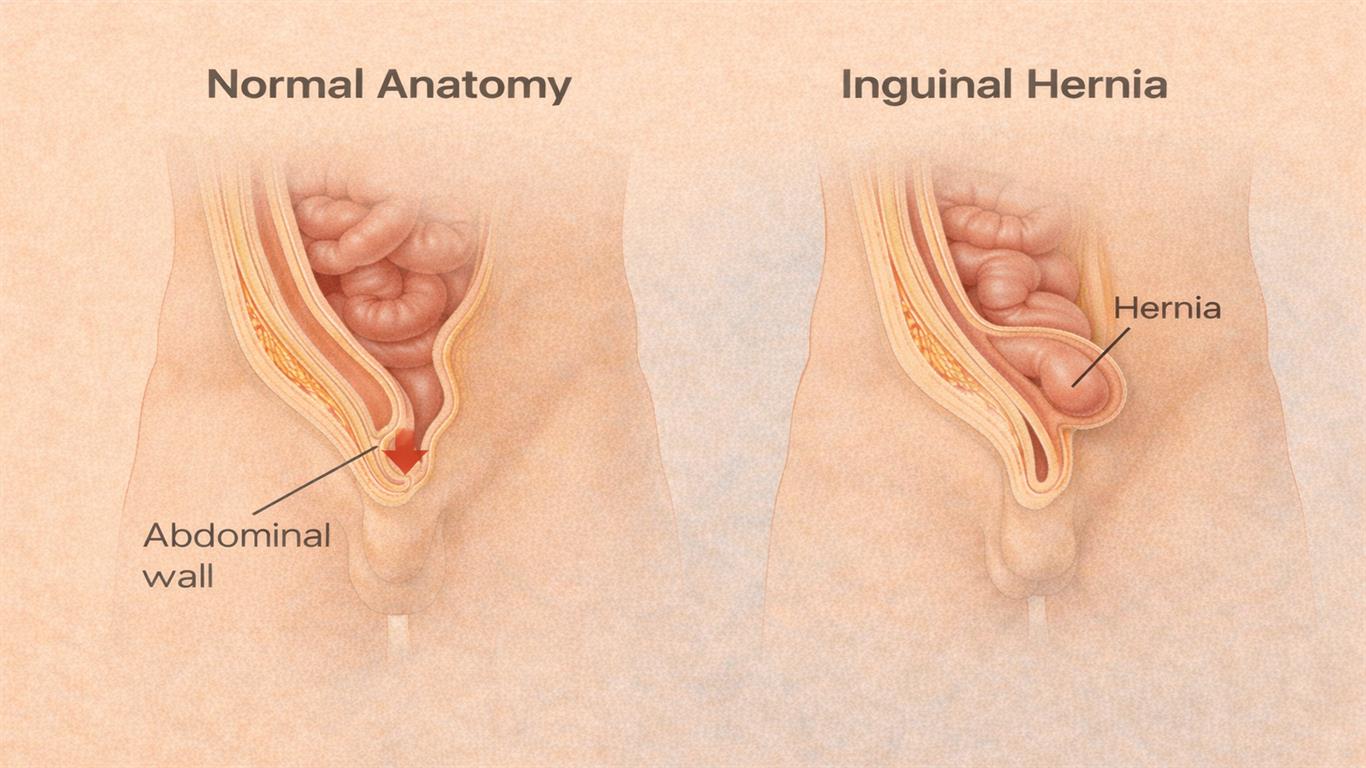
Many people ignore a hernia because it looks small or causes only mild discomfort. A hernia is more than a visible bulge—it is a weakness in the abdominal wall that can worsen over time and lead to serious complications if left untreated.
What Exactly Is a Hernia?
A hernia occurs when an internal organ or fat pushes through a weak spot in the muscle or connective tissue. This commonly appears in the groin, abdomen, or near previous surgical scars. The bulge may increase while coughing, lifting, or standing for long periods.
Why Hernias Do Not Heal on Their Own
Once a muscle weakness develops, it does not close naturally. Medicines, belts, or exercises may reduce discomfort but cannot repair the defect. Over time, the opening usually becomes larger, making treatment more complex.
Why Early Treatment Is Important
Prevents Complications
An untreated hernia can become obstructed or strangulated. Strangulation cuts off blood supply to the intestine, which can be life-threatening and requires emergency surgery.Reduces Pain and Discomfort
Early repair often involves less pain and quicker recovery. Delayed cases tend to cause persistent discomfort and affect daily activities.Simpler Surgery, Faster Recovery
Smaller hernias are easier to repair and often suitable for minimally invasive (laparoscopic) surgery, leading to shorter hospital stay and faster return to normal life.Avoids Emergency Situations
Planned surgery is safer than emergency surgery. Emergency hernia operations carry higher risks of infection, bowel damage, and prolonged recovery.Common Warning Signs You Should Not Ignore
A bulge that increases in size
Pain or heaviness in the groin or abdomen
Pain while lifting, coughing, or standing
Sudden severe pain, redness, or vomiting (medical emergency)
When Should You See a Doctor?
As soon as a hernia is noticed, even if it is painless. Early evaluation helps plan the right treatment at the right time, avoiding complications later.
Key Takeaway
A hernia is not just a cosmetic issue. Treating it early protects your health, reduces surgical risk, and allows a smoother recovery. Waiting often makes the problem bigger and the solution harder.