
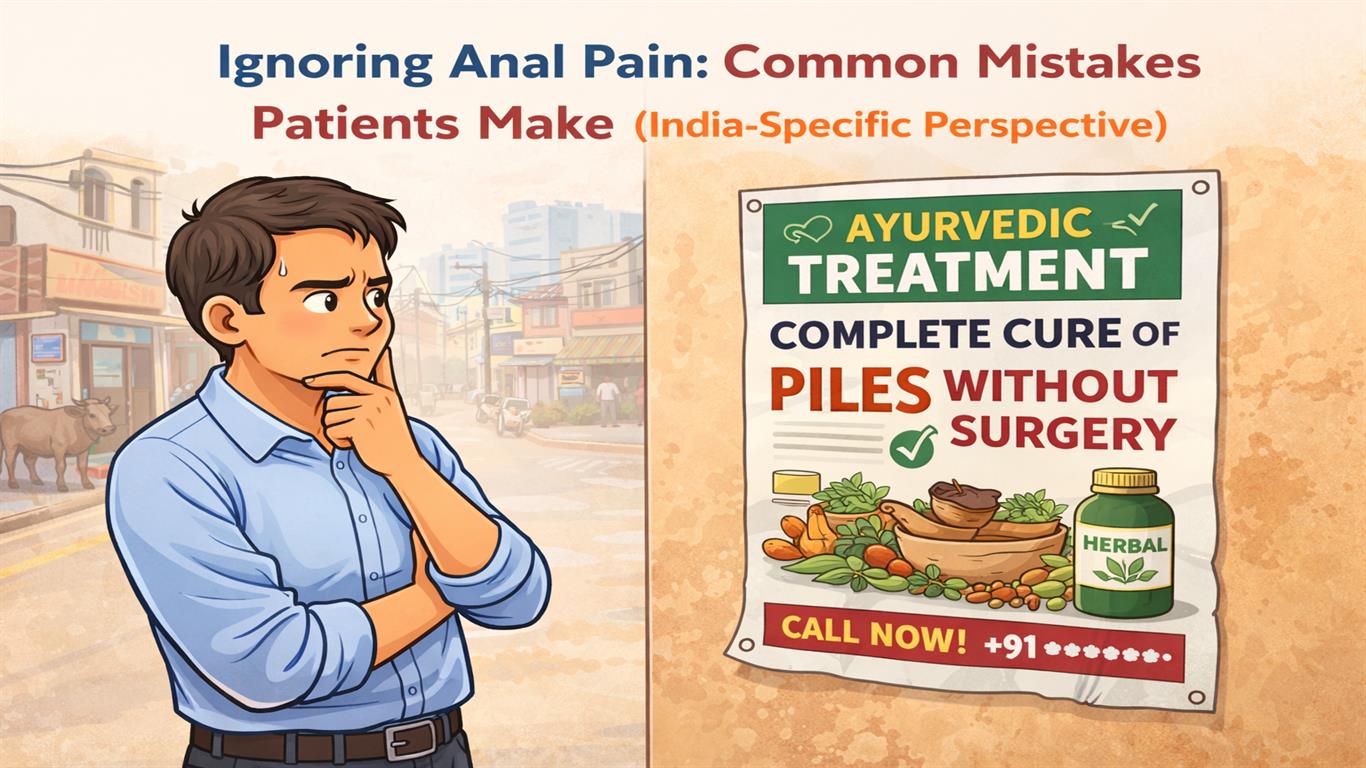
In India, anal pain is often ignored or treated with home remedies, Ayurveda, or homeopathy due to embarrassment, social stigma, or fear of surgery. While these approaches may promise complete cure, delay in correct medical treatment frequently turns simple problems into chronic or complicated conditions.
Mistake 1: Assuming All Anal Pain Is Piles
Many people in India use the term “piles” for any anal symptom. In reality, fissure causes severe pain and fistula causes discharge. Treating everything as piles with oils or powders delays proper diagnosis and worsens the disease.
Mistake 2: Relying on Assurances of “Permanent Cure” From Alternative Therapies
Patients are often reassured that Ayurveda or homeopathy can permanently cure piles, fissure, or fistula without surgery. While these systems may provide temporary symptom relief, they do not repair structural problems like a torn lining or an infected tract. Delay increases chronicity and recurrence.
Mistake 3: Prolonged Use of Home Remedies and Over-the-Counter Creams
Sitz baths, herbal oils, and local creams are frequently continued for months without improvement. Temporary relief creates false confidence while the underlying problem progresses silently.
Mistake 4: Avoiding Medical Consultation Due to Social Stigma
Many patients delay seeking care because of embarrassment, especially in rural and semi-urban areas. This delay often converts an easily treatable condition into one requiring surgery.
Mistake 5: Fear of Surgery Based on Misinformation
Fear created by stories of painful surgeries or long recovery makes patients avoid proper evaluation. Modern treatments, including minimally invasive procedures, are far safer and more comfortable than commonly believed.
Mistake 6: Ignoring Constipation and Diet Habits Common in India
Low fiber intake, irregular meals, dehydration, and prolonged squatting increase strain during bowel movements. Without correcting these habits, no treatment—medical or surgical—can succeed long term.
Mistake 7: Ignoring Pus Discharge or Recurrent Swelling
Persistent discharge or repeated boils near the anus are often ignored or treated locally. In Indian settings, this commonly represents fistula disease, which rarely heals without proper intervention.
When Delay Becomes Dangerous
Severe pain with fever, rapidly increasing swelling, or foul-smelling discharge may indicate abscess or spreading infection. Delay at this stage can lead to emergency surgery and prolonged recovery.
Key Takeaway
In the Indian context, delaying medical care due to alternative treatment promises or social hesitation is a major reason anal conditions worsen. Early medical evaluation leads to simpler treatment, faster relief, and better long-term outcomes.