
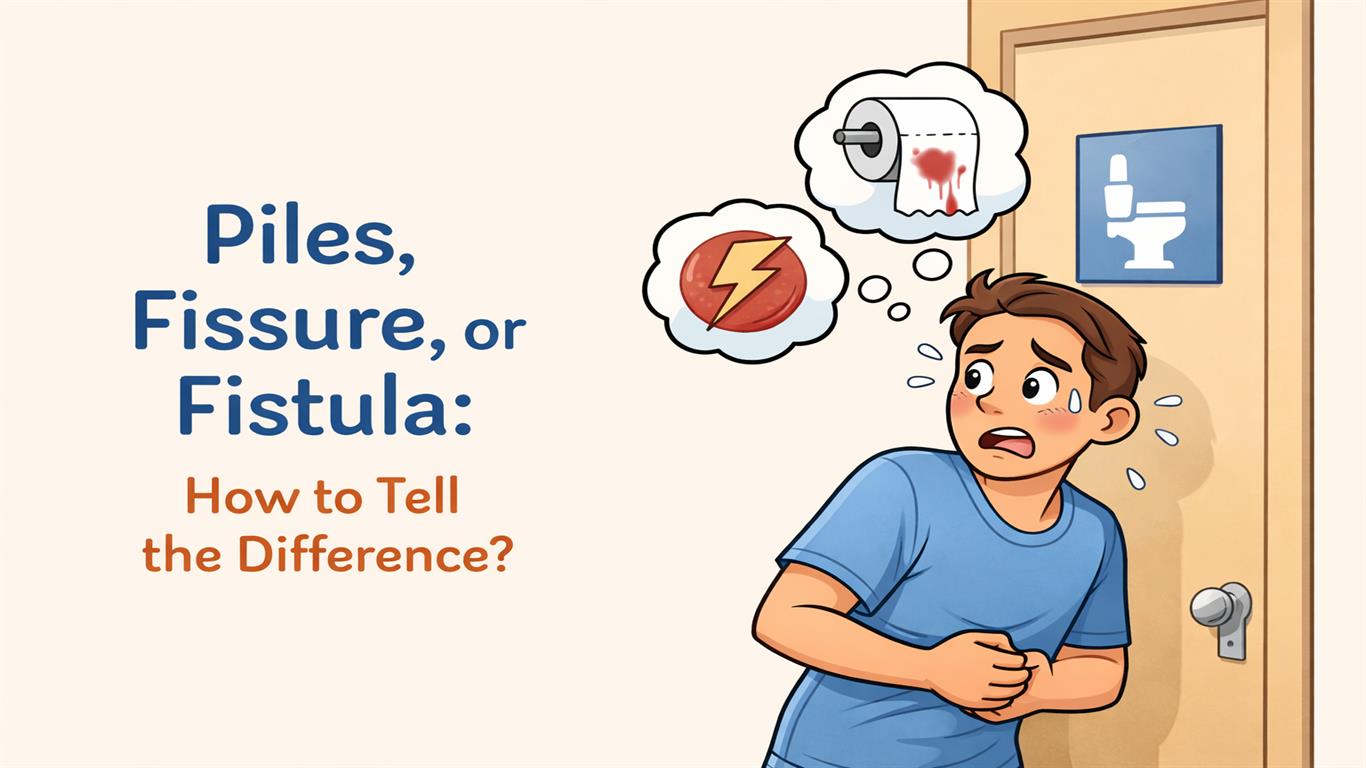
Pain, bleeding, or discomfort near the anus is very common, yet many people assume all such problems are “piles.” In reality, piles, anal fissure, and anal fistula are three different conditions with different causes, symptoms, and treatments. Knowing the difference helps in getting the right treatment early and avoiding complications.
What Are Piles?
Piles, also called haemorrhoids, are swollen blood vessels inside or around the anus. They develop due to increased pressure during bowel movements, commonly from constipation, prolonged sitting, or pregnancy.
Typical features
Usually painless bleeding during stools
Bright red blood seen on stool or toilet paper
Soft swelling or lump near the anus
Mild discomfort, heaviness, or itching
Pain is usually absent unless piles become thrombosed or severely prolapsed.
What Is an Anal Fissure?
An anal fissure is a small tear in the inner lining of the anal canal. It is most often caused by passing hard stools or repeated constipation.
Typical features
Severe sharp or burning pain during and after passing stools
Pain may last for hours after bowel movement
Small amount of fresh blood
Tightness or spasm of the anal opening
Fear of passing stools due to pain
Unlike piles, fissure pain is intense and out of proportion to the visible wound.
What Is an Anal Fistula?
An anal fistula is an abnormal tunnel between the anal canal and the skin around the anus. It usually develops after an untreated or inadequately treated anal abscess.
Typical features
Persistent pus or foul-smelling discharge
Repeated boils or swelling near the anus
Pain, especially during sitting or movement
Soiling of underclothes
A small opening or wound near the anus that does not heal
Bleeding is usually minimal or absent in fistula.
How to Tell the Difference Easily
Pain
Piles cause little or no painFissure causes severe cutting or burning pain
Fistula causes dull, persistent pain or discomfort
Bleeding
Common and painless in pilesSmall amount with severe pain in fissure
Rare in fistula
Discharge
Absent in pilesAbsent in fissure
Persistent pus discharge in fistula
Swelling or Lump
Soft lump in pilesUsually no lump in fissure
Recurrent swelling or opening in fistula
Why Correct Diagnosis Is Important
Each condition needs a different treatment approach. Treating a fissure as piles delays healing. Ignoring a fistula can lead to repeated infections and complex surgery. Early and correct diagnosis leads to simpler treatment, faster recovery, and less pain.
When Should You Seek Medical Help?
If bleeding, pain, discharge, or swelling persists for more than a few days
If pain is severe or worsening
If there is pus discharge or repeated boils near the anus
If symptoms keep coming back despite treatment