
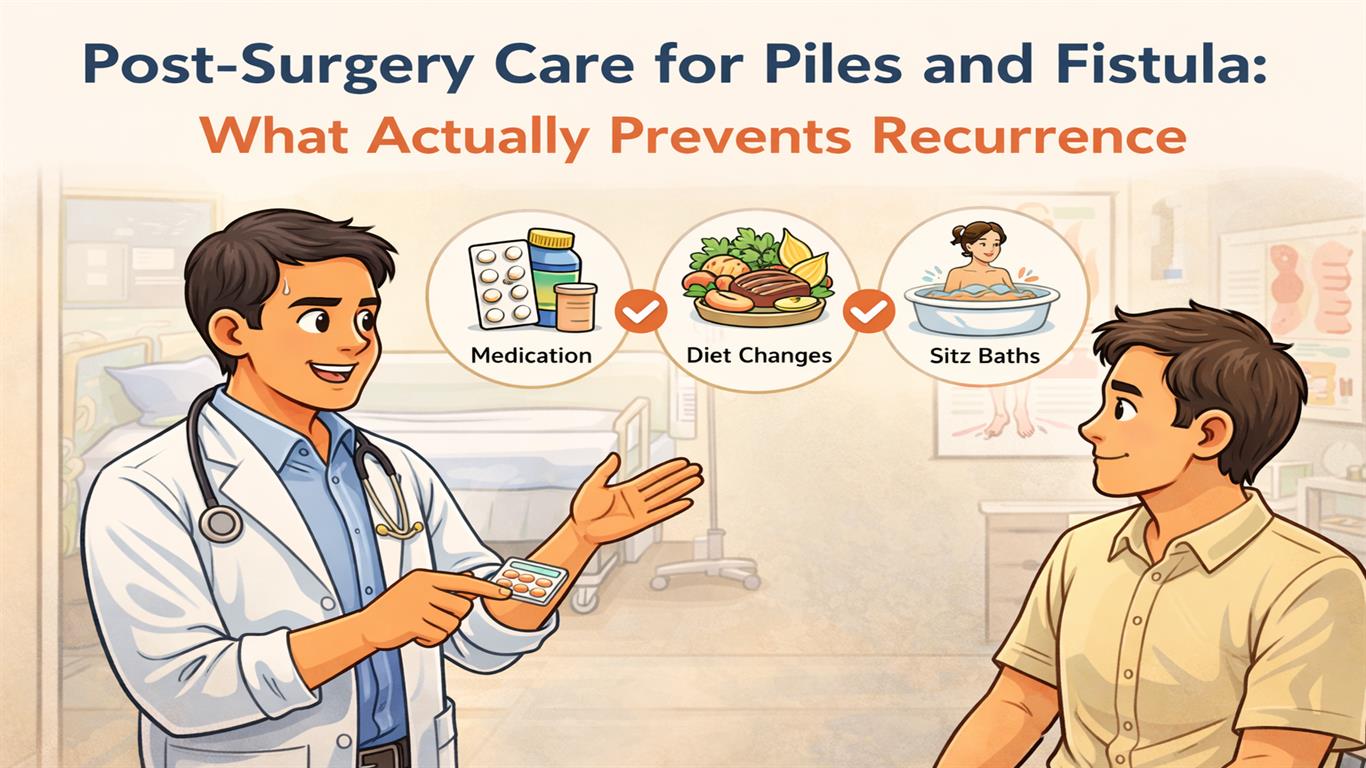
Surgery for piles or fistula treats the existing disease, but long-term success depends largely on post-surgery care.
In India, recurrence is commonly seen not because surgery failed, but because lifestyle, bowel habits, and follow-up care were neglected after initial recovery.
Understanding what truly prevents recurrence helps patients protect the results of surgery for years.
Why Recurrence Happens After Surgery
Surgery removes piles or fistula tracts, but it does not automatically correct the factors that caused them. Chronic constipation, straining, poor diet, untreated infections, and ignoring follow-up advice are the most common reasons for recurrence.
Bowel Habits: The Most Important Factor
Regular, strain-free bowel movements are critical.Avoid delaying stools
Do not strain or sit for long periods in the toilet
Maintain a fixed daily bowel routine
Respond promptly to the urge to pass stools
Repeated straining increases pressure in anal veins and disrupts healing tissue, leading to recurrence.
Diet That Protects Surgical Results
A long-term fiber-rich diet is essential, not optional.Include vegetables, fruits, whole grains, and salads daily
Adequate water intake throughout the day
Avoid excessive spicy, fried, and low-fiber foods
Limit alcohol and processed foods
Diet correction is one of the strongest protective factors against piles recurrence and fissure formation after surgery.
Constipation Prevention Is Non-Negotiable
Even short episodes of constipation after surgery can damage healing tissue.
Adequate hydration
Fiber supplementation if advised
Avoid laxative dependence without guidance
Smooth bowel movements protect the surgical site and reduce pain and inflammation.
Wound Hygiene and Local Care
Good anal hygiene prevents infection and promotes proper healing.
Gentle cleaning after bowel movements
Warm sitz baths as advised
Avoid harsh soaps or excessive wiping
Poor hygiene increases infection risk, especially after fistula surgery.
Activity and Lifestyle Modifications
Prolonged sitting, heavy lifting, and sudden strain should be avoided in the long term.Take short walking breaks during long sitting hours
Use proper lifting techniques
Gradually return to physical activity
Maintain healthy body weight
Obesity and sedentary lifestyle significantly increase recurrence risk.
Follow-Up and Completing Treatment
Many patients stop follow-up once pain reduces. This is a common mistake.
Scheduled follow-ups help detect early problems
Fistula patients may need longer monitoring
Incomplete healing must be addressed early
Ignoring follow-up increases the chance of hidden infection or incomplete closure.
Reliance on home remedies or alternative treatments after surgery may delay proper healing. These methods may relieve symptoms but do not correct bowel habits or wound healing needs, increasing recurrence risk.